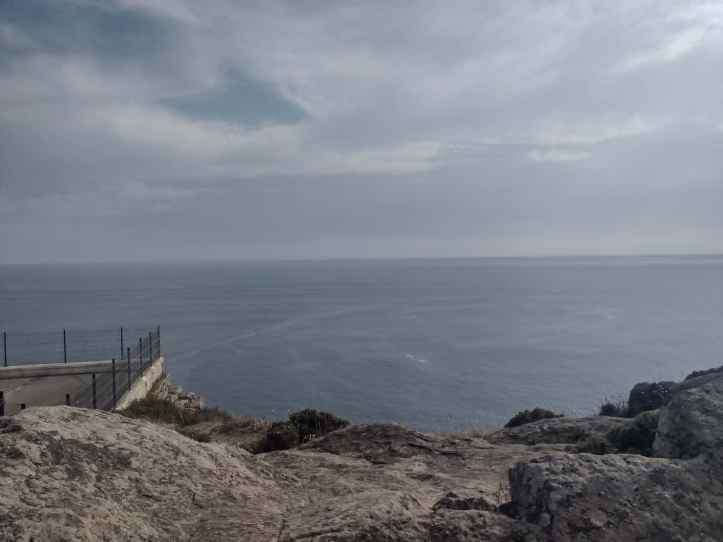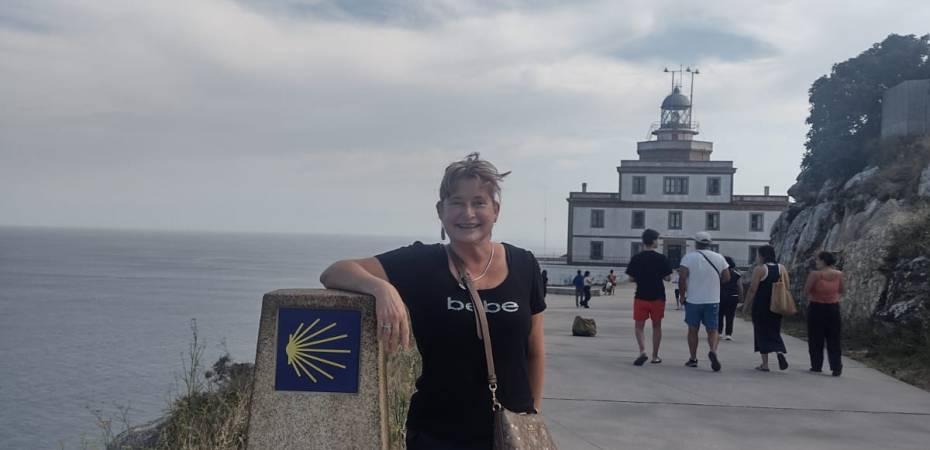
They say you should write about what you know. That advice has always resonated with my writerly ear because I’ve always considered myself a realist. Though I’ve occasionally played around with fantasy, as I did in The Day I Returned to Yesterday, there’s always some doubt as to whether everything that happens is just the product of the protagonist’s imagination.
As I mentioned in another post, until now almost all my plots have taken place in Havana. Yes, I’ve sometimes had to ask about this or that detail, because I left the island thirty years ago. But Cuba hasn’t changed all that much and, after all, Havana is the city where I was born and raised, and where my mother and many of my friends still live.
Ah, but a few months ago I started writing a new novel that takes place in Galicia. It has some autobiographical touches, of course, like almost all my books. The narrator is a Spanish professor, except that instead of living in Hobbs, New Mexico, she lives in Los Angeles, California, and teaches at an all-girls prep school rather than a community college. But la pobrecita manages to lose everything in a single day (job, housing, and peace of mind) and decides to hightail it to Galicia, the land of her ancestors, lured there by some very strange photos she has just received.
So the protagonist lands in Santiago de Compostela…and that’s when the trouble begins. When I wrote those chapters, I had never been there, so I got quite a few things spectacularly wrong. For example, her boyfriend picks her up in a Jeep, which he blithely parks right in front of her hotel, and later, just as blithely, in front of the restaurant where he takes her for a romantic dinner.
Once I arrived in Santiago, I discovered that parking in front of hotels is extremely difficult and that the restaurant I had chosen for my lovers’ dinner couldn’t even be reached by car because it is in the old quarter of the city.
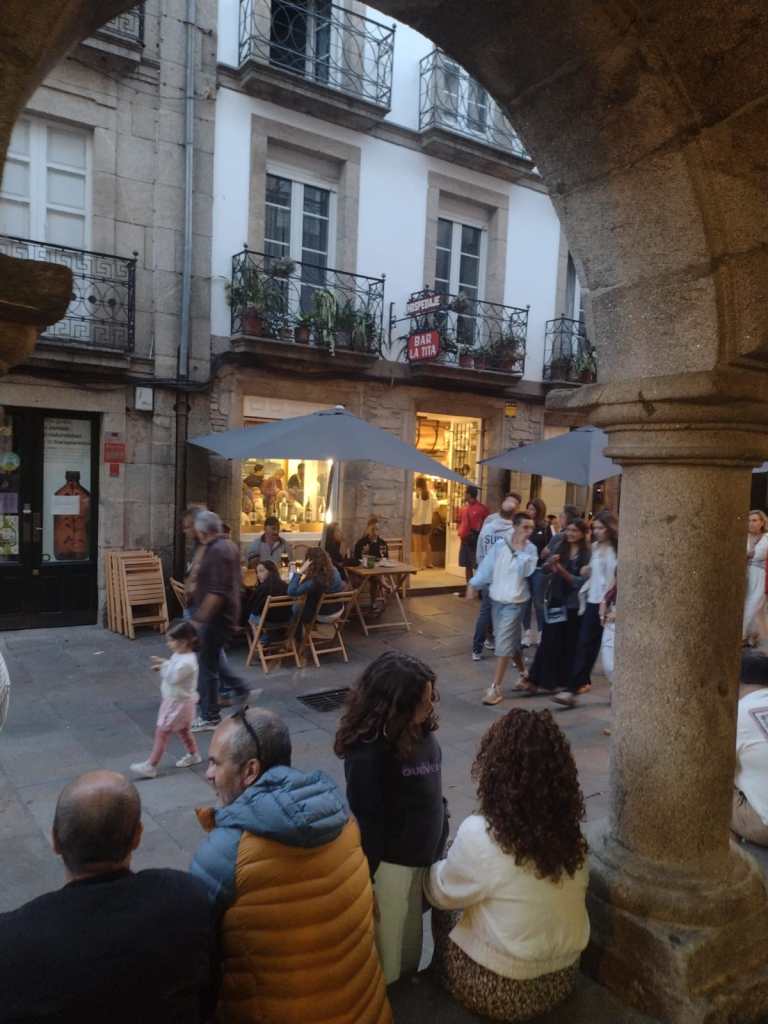
Then there was the fact that I didn’t see a single Jeep during my stay. So now, besides relocating parking spaces, I’m shopping for a new car for the boyfriend.
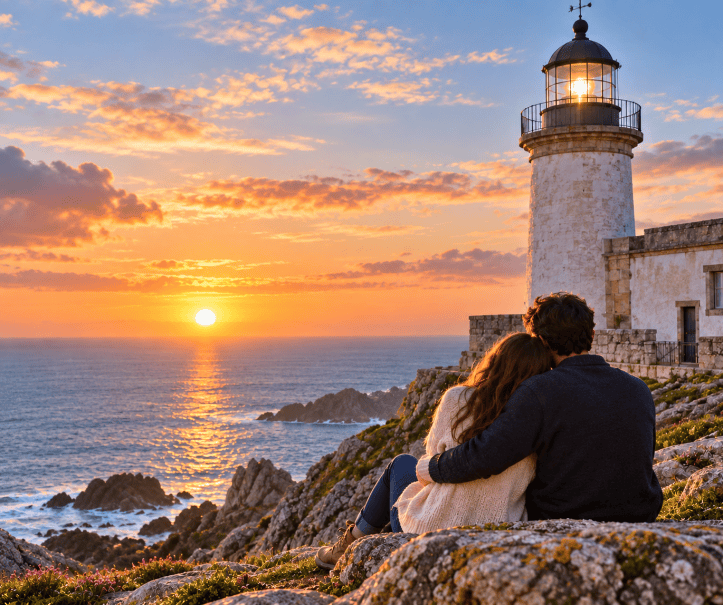
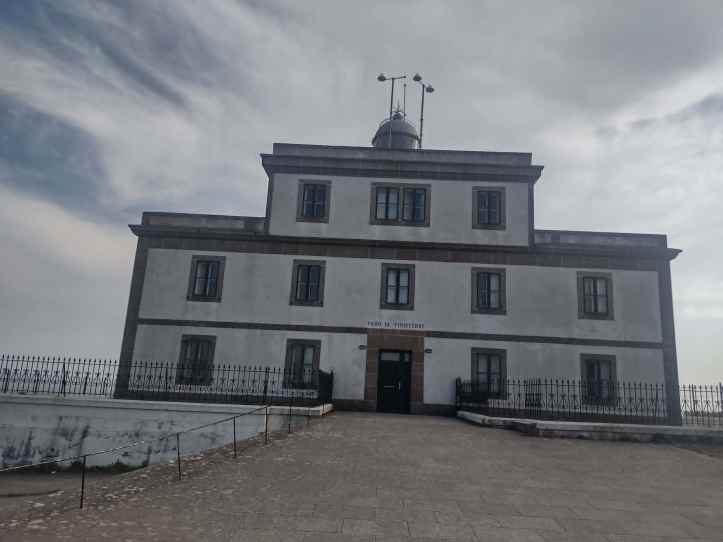
But that wasn’t all. My worst blunder involved the famous Finisterre Lighthouse. This was the scene I had imagined, with my protagonist and her boyfriend cuddled up beside it:
In reality, this is the lighthouse, perched on top of a massive building. They might as well cuddle up next to the local post office:
At this point, you’re probably wondering if I checked any of this with ChatGPT, Gemini, or some other know-it-all denizen of the Internet. Well, as a matter of fact, I did. But it never occurred to me to ask the right questions (“Can you actually park in front of such-and-such restaurant in Santiago?”). Which proves that if you don’t know what questions to ask, nobody—not even, or perhaps especially, our online know-it-alls—can give you the answers you need.
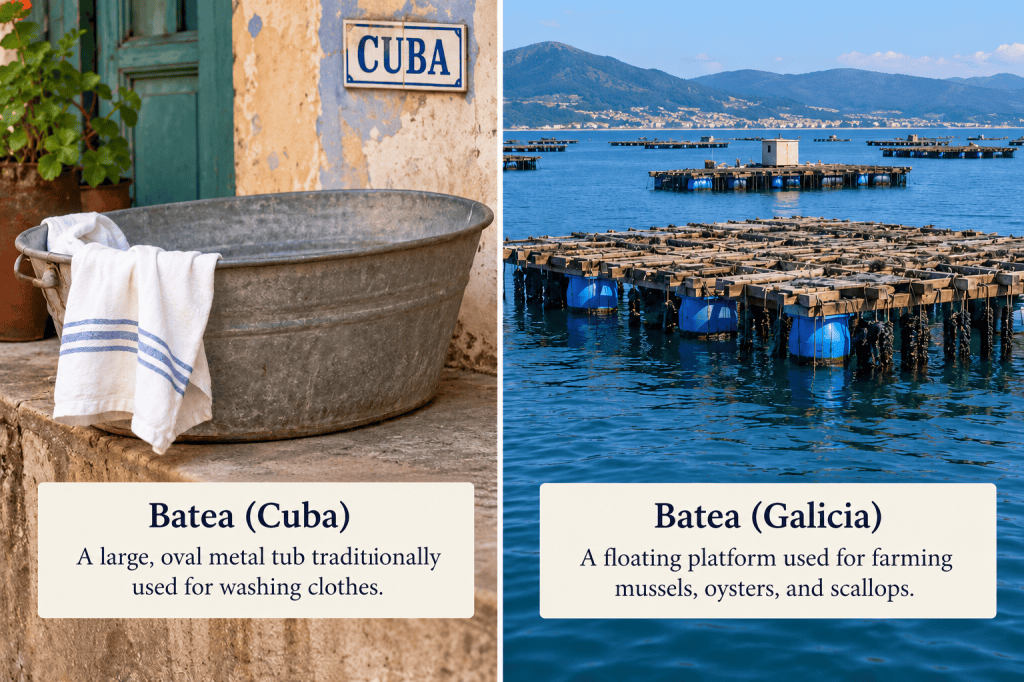
And now I’m still writing. I’m transcribing interviews I did with Cristina, the guide who took us, through Academia Iria Flavia (the wonderful language school I attended, I’ll write soon about it), to visit several towns along the route from Santiago to Cape Finisterre. She mentioned the bateas, big floating platforms used in Galicia to farm mussels, oysters, and scallops.
I wonder if that might be the origin of the Cuban use of the word batea, meaning a large oval tub traditionally used for washing clothes…
The bateas, the scallops, and even the cathedral’s huge botafumeiro will now make their way into the new novel. I only hope they fare better than the nonexistent Jeep and the poor Finisterre Lighthouse, which, without ever having seen it, I had turned into the setting for a B-movie romance.