
I have worked with the Taos Municipal Schools as a Visiting Artist for several years and one of the topics we have explored is visual storytelling. As a result, we have several bilingual books, written by the students themselves, that started as visual storytelling sessions and then evolved into books.
This is the process that we follow:
1 In the introductory class, we discuss the basic elements of a story (plot, characters, setting, etc.) I give them some examples. I generally suggest they use a setting they are familiar with, like the town of Taos, and characters with whom they can identify.
2 Students come up with a story outline of their own. The outline is often a short paragraph and I stress the fact that it is subject to change. It is just our initial roadmap.
3 Afterwards comes the actual visual storytelling part. The students
a) either draw the most important scenes of the story (from five to fifteen drawings, depending on the students’ age and the complexity of the plot) and arrange them into a physical booklet
b) or find images online that can be used to represent the scenes and put them into a virtual album or story board.
I have seen a trend toward online-only work (virtual albums and boards) vs. drawing with pencils and paper. Recently, some students resorted to AI-generated images. I am very much on the fence about that!
The students can work individually or in teams, depending on the side of the classroom. Now, as a side note, I prefer to give them individual assignments because in teams, there tend to be one or two that do most of the work while others just watch passively. And, as a writer myself, I think that creative writing is quite a personal, individual journey. But of course, if we have 40 students in a classroom, we will have team projects.
4 Students use the images from the albums or booklets to write a story which they type into a Word document and send to me. I usually end up with 10 to 15 stories, depending on the size of the classroom.
5 The stories are edited by me and later made into a book and published on Amazon. Sometimes the students’ drawings are included as well.
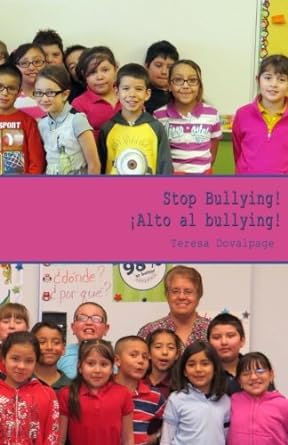
Here are some of our books: Somos taoseños/ We are Taoseños, Alto at bullying/ Stop bullying.
This post is a response to a LinkedIn prompt:
How can you teach visual storytelling skills for writing to students?
 Teresa Dovalpage: a Cuban writer's blog